Hearts of Iron IV Ideologies: Politics and War Guide
Learn how Hearts of Iron IV ideologies affect diplomacy, war goals, and political change. Compare the four groups, IDs, and paths to a new government.
Jump to
What Are the Four Ideology Groups?
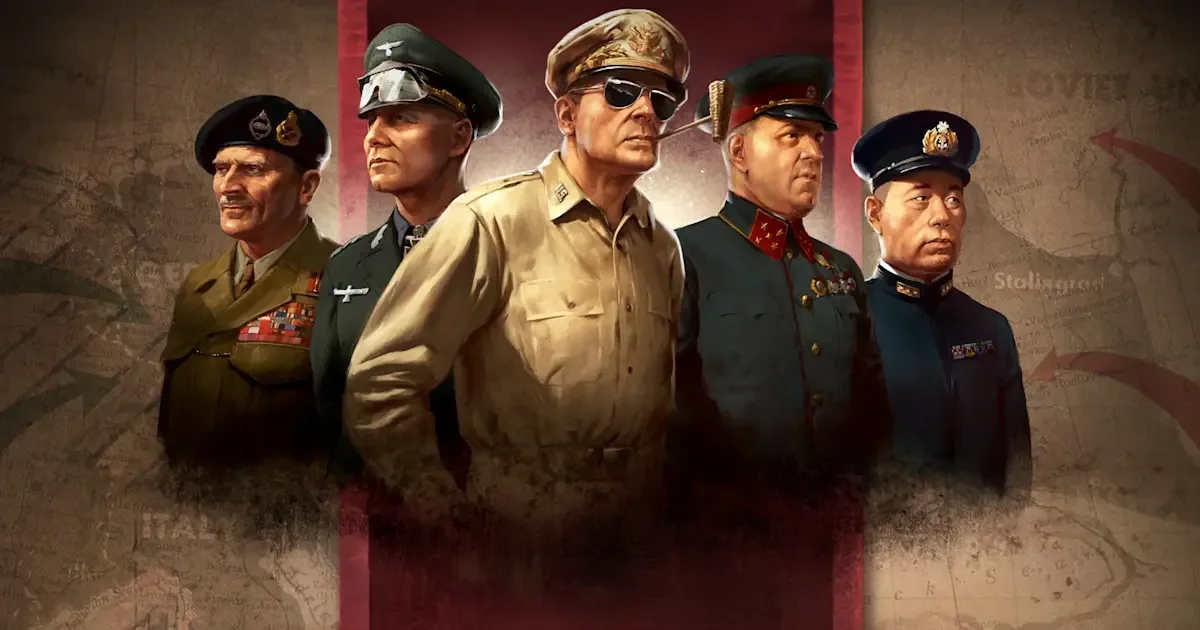
Hearts of Iron IV ideologies fall into four groups: democratic, communist, fascist, and non-aligned. Your ruling ideology helps determine which diplomatic actions you can take, including war justification, faction membership, and intervention. Political focus paths and advisors can change your country's direction, so choosing a government also shapes your route into the war.
Base-Game Ideology Groups
| Ideology group | Internal ID | What it means for your campaign |
|---|---|---|
| Democratic | democratic | War declarations and diplomatic intervention face restrictions tied to world tension and other conditions. |
| Communist | communism | Allows manual war goal justification without the same democratic restrictions. |
| Fascist | fascism | Allows manual war goal justification and supports expansion through political focus paths. |
| Non-aligned | neutrality | Covers varied governments, including many monarchies and authoritarian regimes outside the other groups. |
Non-aligned does not mean your country must stay out of wars. It is a government category, not a promise of diplomatic neutrality. A monarchist political path can still include territorial ambitions, alliances, and war goals.
The game also uses sub-ideologies. Conservatism, liberalism, and socialism, for example, appear within the democratic group. These provide more specific political identities, while the broader group supplies the main framework for diplomatic rules. A leader labeled socialist therefore does not automatically lead a country in the communist group.
Official page: Hearts of Iron IV (paradoxinteractive.com)
How Ideology Affects Diplomacy and War
The practical difference between governments often appears when you try to take an action. Democratic countries face restrictions on starting wars, including conditions involving world tension and whether a target has generated tension. Communist and fascist governments have greater freedom to justify wars manually.
World tension also affects diplomatic options such as joining factions, guaranteeing independence, sending volunteers, and providing lend-lease. Ideology definitions contain separate rules and tension requirements for these actions.
Hover over a grayed-out diplomatic action before changing your strategy. Its tooltip explains the conditions blocking it. Raising relations addresses opinion requirements; it does not replace a required war goal or remove an ideological restriction.
Manual Justification and Focus War Goals
For manual war goal justification:
- Open diplomacy with your intended target.
- Select the war goal justification action.
- Choose the reason and a state.
- Review the political power cost and completion time.
- Submit the justification and wait for the war goal to finish before declaring war.
National focuses provide another route. Political branches can award war goals, and some focuses directly trigger wars. Read the focus effects before spending political power on a separate justification.
Check the target's guarantees before declaring war. A guarantee can bring another country into the conflict. A war goal obtained through your focus tree still demands a look at the diplomatic situation.
How to Change Your Government
Start with your country's political focus tree. Its branches often determine whether you remain with your starting government or pursue democracy, communism, fascism, or a non-aligned alternative.
Political paths can increase ideological support, unlock decisions, and lead to government changes. Some culminate in civil war. Mutually exclusive branches also make the order of your choices consequential: selecting one direction can close another.
Use this sequence when planning a switch:
- Read ahead through the political branch. Check prerequisites, mutually exclusive choices, and any civil war effects.
- Inspect available political advisors. Ideology-promoting advisors increase support for their associated group.
- Watch the political popularity chart. It tracks ideological support separately from the identity of the ruling government.
- Follow the relevant decisions and events. Country-specific political paths use these to carry the transition forward.
Britain illustrates how closely domestic politics and foreign policy connect. Its alternative political branches offer fascist, communist, and non-aligned directions, with focus choices guiding the change.
Do not plan a switch around popularity alone. Political support, the ruling party, and the focus or event that changes the government are distinct parts of the system.
Budget Political Power for the Transition
The base political power gain is 2 per day, while running a national focus costs 1 per day. A typical 70-day focus therefore consumes 70 political power through that daily cost; shorter 35-day focuses also exist. National spirits and other modifiers affect your actual income.
That creates competition between political development and immediate spending. Advisors, decisions, and law changes all draw on the same resource.
Before hiring an ideology-promoting advisor, check the requirements of your intended focus path. An advisor that advances your political goal still competes with industrial bonuses, military staff, and changes to conscription or economic laws.
Reserve political power for the decisions your chosen branch requires. Track your displayed daily gain while a focus runs, rather than budgeting from the base income alone.
Ideology also interacts with mobilization restrictions, but it does not replace the other conditions attached to a law. Read those requirements before assuming a government change will immediately unlock your desired economy or conscription setting.
Ideology IDs, Console Commands, and Mods
The internal IDs in the comparison table matter when using console commands. In the base game, non-aligned uses neutrality, communist uses communism, and fascist uses fascism.
Two commands address different parts of politics:
add_party_popularitychanges support for an ideology. Enter the ideology ID followed by the numerical amount.set_ruling_partychanges the ruling ideology. Enter the ideology ID after the command.
For example, set_ruling_party communism selects the communist group. Increasing communist popularity with add_party_popularity instead changes support; it serves a different purpose from directly setting the ruling party.
Modded Political Systems
Total conversion mods can replace the base game's four groups with their own political categories and IDs. Kaiserreich and Kaiserredux, for example, use identifiers including totalist, syndicalist, social_liberal, and national_populist. Old World Blues uses people, elites, intellectuals, and ruler.
Displayed names can also differ from the underlying identifier. Millennium Dawn: Modern Day uses democratic for Western Outlook and communism for Emerging Outlook.
Use the identifiers belonging to your active mod. A familiar political label does not guarantee that its console ID matches the base game, and changing party popularity does not necessarily change a mod's separate political systems, such as parliamentary seats.
Continue with
 Hearts of Iron IV Justify War Goal: How to Declare WarLearn how the Hearts of Iron IV justify war goal system works, spend political power, select a target state, and turn a completed goal into a declaration.
More in Diplomacy
See all Diplomacy
Continue exploring
Join the community
Official channels for news, updates and player help: