
Hearts of Iron IV China Guide: Survive and Beat Japan
Build a stronger army with this Hearts of Iron IV China guide. Learn how to reform your forces, defend ports, manage industry, and push Japan out of China.
Jump to
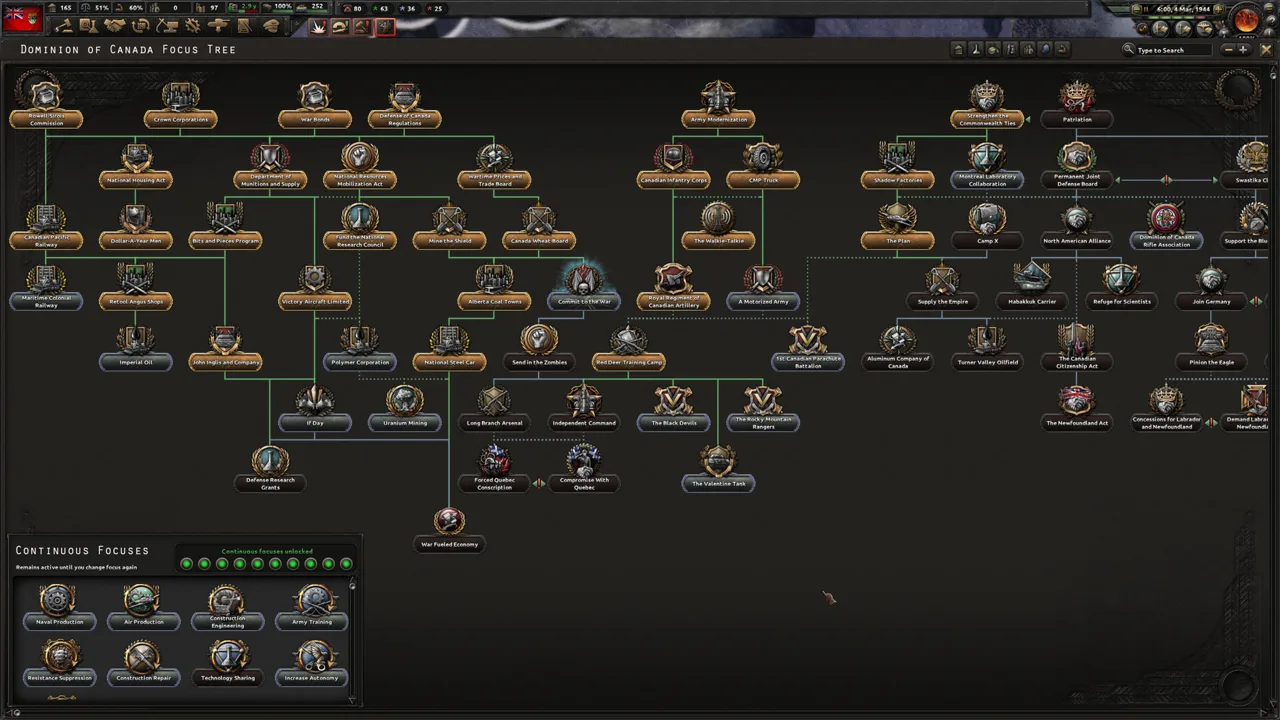
How to Win as China
Hearts of Iron IV China campaigns hinge on turning manpower into an equipped, reformed army before Japan overwhelms your defenses. Prioritize infantry equipment, military reform, defensible river lines, and coastal ports. Keep the Chinese United Front together while your industry develops, then counterattack where Japanese supply and troop strength have weakened.
China’s central problem is converting its population into combat power. An under-equipped division fighting under national penalties can lose even with numerical superiority. Before expanding the army, examine its equipment shortages and the reforms available in your focus tree.
Your opening priorities depend on which Chinese content you have enabled:
| Content setup | Starting constraint | Opening priority |
|---|---|---|
| China’s starting research | 2 research slots | Concentrate on infantry and industry; pursue additional slots through national focuses |
| Without No Compromise, No Surrender | Army Corruption imposes −30.0% division attack and −30.0% division defense | Start military reform and reserve Army XP for the decisions that reduce these penalties |
| With No Compromise, No Surrender | Corruption in the Administration imposes −10.00% construction speed and a 25.0% Consumer Goods Factories factor | Advance administrative and economic reforms alongside military preparation |
| With No Compromise, No Surrender | Aviation Affairs Commission imposes −20.0% air experience gain and +25.0% air accident chance | Develop the air force through its reform branch before committing heavily to aviation |
Official page: Hearts of Iron IV (paradoxinteractive.com)
Understand Your China Focus Tree
The Chinese focus tree introduced with Waking the Tiger is available in the base game following that expansion’s integration. No Compromise, No Surrender, released November 20, 2025, adds expanded Nationalist and Communist Chinese focus trees, new military doctrines, and expanded faction features.

That distinction matters when choosing focuses. The older inflation and Army Corruption progression belongs to a different setup from the expanded tree’s administrative, economic, and military corruption systems.
Nationalist China’s expanded branches
With No Compromise, No Surrender enabled, the political branches support several different campaigns:
- End Military Primacy: Follow political tutelage toward democracy and presidential choices.
- Dang Guo: Develop Kuomintang rule through Chiang Kai-Shek or Wang Jingwei.
- Strengthening our Resolve: Bring Dai Li and the Blue Shirt faction to power through a fascist route.
The practical preparation branches address the weaknesses that make the opening war difficult:
- Promote the National Currency develops the economy, research, resource extraction, and military industry.
- Military Affairs Commission begins addressing corruption in the armed forces.
- Protracted Warfare provides defensive bonuses and fortifications.
- Decisive Battles develops offensive capabilities.
- Strengthen the Nationalist Air Force improves the Aviation Affairs Commission modifier.
- Republic of China Navy develops naval capabilities and dockyards.
Read the requirements before entering the defensive or offensive army sub-branches. Their progression restricts when you can begin the other route.
For a campaign centered on surviving Japan, prioritize reforms and defensive preparation before pursuing distant expansion goals.
Prepare Your Industry and Army Before Japan Attacks
On a historical campaign, the Marco Polo Bridge Incident brings the Japanese threat into focus in 1937. Use the opening period to repair the army’s immediate weaknesses.
Keep research focused
China starts with 2 research slots, with 3 more available through its national focus tree. That small opening research capacity makes scattered projects expensive.
Prioritize infantry equipment and industrial technology. Pursue an additional research slot early, and use foreign research bonuses for equipment your factories can actually produce.
Specialized projects need a clear purpose. Mountaineers can help in rugged terrain, but researching them immediately competes with the infantry and industrial improvements your entire army needs.
Equip existing divisions
Check the infantry equipment deficit before queuing more formations. China begins with a sizable army that lacks equipment; adding divisions increases demand on an already limited production base.
Keep infantry equipment at the center of production. Add artillery as your factories can sustain it, concentrating extra firepower in formations that need to hold difficult sectors or conduct limited attacks.
Older templates such as seven infantry battalions with two artillery battalions appear in legacy strategies. Build around your equipment stockpile and the doctrine system you are using rather than automatically converting the entire army to that template.
Complete the reforms that restore combat strength
Without No Compromise, No Surrender, Military Affairs Commission leads toward the army reform progression. The Army Reform focus unlocks decisions that reduce and eventually remove Army Corruption, requiring Army XP.
Reserve experience for those decisions. An army-wide improvement to attack and defense helps every affected division, including the infantry already holding the front.
With the expanded tree, follow the military branch that improves Corruption in the Armed Forces. Keep administrative reform moving as well: slow construction and heavy consumer goods demands reduce how quickly your economy can support the war.
Protect stability and economic output
In the older setup, low stability hurts political power gain and factory output. Stability below 50% during wartime can also trigger negative events.
Use stability bonuses in the political tree, available advisers such as Lin Sen and Soong Mei-Ling, or Improved Worker Conditions where applicable.
Manage inflation alongside industrial expansion in the older tree. Low Inflation reduces factory output by 5.00%; Economic Collapse raises that penalty to 25%. Alternate projects that increase inflation with the financial reforms that reduce it.
Hold the Northern Front and Coastal Ports
Japan can pressure China through the northern land front while opening additional fronts through naval invasions. Prepare for both before committing every division to one battle line.
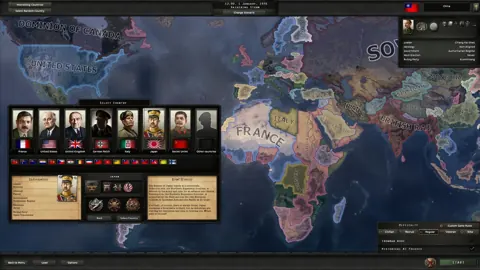
 Image: Steam / Paradox Development Studio
Build a defense around terrain
Use rivers and defensible terrain to compensate for weaker combat statistics. Prepare fallback positions so a lost province does not force a disorganized retreat across the entire front.
Fortifications can reinforce selected positions. Keep their construction tied to a line you can supply and defend, while continuing to address equipment shortages.
Avoid repeated attacks across rivers into mountains while your army still suffers from major penalties. Those battles consume the equipment and organization you need to remain in the war.
Defend ports and retain reserves
Station defenders at coastal ports and keep reserve formations close enough to reinforce threatened landings. Watch nearby coastal provinces as well: troops landing beside a port can attack its defenders from land.
The Shandong peninsula deserves attention because landings can isolate the port at its tip.
When Japanese troops land without securing a port, contain them and exploit their supply problems. If they capture a port, prioritize a counterattack before the foothold develops into another sustained front.
Keep the small Chinese navy sheltered while Japan controls the surrounding seas. Direct your immediate effort toward preventing a successful landing.
Use the United Front to reduce pressure
Warlord and Communist forces can help cover frontier sectors while your main armies defend critical positions. Their territory also creates depth between Japanese advances and your industrial centers.
Early reunification offers factories and resources, especially through Guangxi Clique, but it also requires focus time, troop movement, and potentially difficult campaigns. Mountainous wars can keep your army occupied when Japan attacks.
For a defense-focused campaign, preserve cooperation against Japan and postpone internal conquest until the external front is secure.
Turn the Defense Into a Counteroffensive
Begin attacking when your reforms, equipment reserves, and local position support it. A front that has stopped moving is an opportunity to rebuild before attempting a breakthrough.
Concentrate attacks around supply hubs and exposed enemy positions. Use limited offensives to create encirclements, then eliminate isolated divisions before advancing farther. Destroying trapped formations removes enemies that would otherwise retreat and defend again.
Watch the wider Pacific war. Japanese declarations against British Malaya and the United States can create additional demands on Japan’s army. Exploit weakened sectors when troops leave, while maintaining your coastal defenses.
Continue improving equipment during the advance. The infantry that survived the opening war still needs replacements, artillery, and sufficient supply to push through northern China and Manchuria.
Playing Communist China Instead
Communist China has a separate opening and political progression. Its expanded tree includes leadership struggles, border wars, infiltration, guerrilla activities, and reunification routes.
Use controlled expansion to improve the small industrial base, but examine faction membership before declaring war on a neighboring warlord. A target joining the Chinese United Front can turn a local conquest into a much wider conflict.
Border wars also demand preparation. Attacking across a river into mountains remains costly even when the enemy’s divisions are weak. Improve your formations before repeating an unsuccessful attempt.
Infiltration offers another way to prepare for the struggle over China. Develop it alongside the army rather than relying entirely on direct attacks. When reunification becomes the objective, account for the factions protecting your remaining targets: attacking a warlord in the Comintern can bring the Soviet Union into the conflict.
Keep military research connected to your division plans. Research support equipment before reorganizing around units that require it, and strengthen existing divisions when deploying more troops would deepen equipment shortages.
China Achievements to Plan Around
Choose an achievement objective before making irreversible political or territorial decisions. Some goals require a particular relationship with the warlords; others reward preserving territory throughout the Japanese war.
| Achievement | Objective |
|---|---|
| Awake and Angry | As China, reconquer all of China and Manchuria and force a Japanese surrender |
| Romance of the Three Kingdoms | As China, puppet and then annex Yunnan and Guangxi Clique |
| Sun Tzu Reborn | As any Chinese nation, have a level 9 field marshal |
| Its all coming together | As China, fully control all core states alone or with subjects |
| The Coast is Clear | As China, never lose a starting coastal state before 1945.9.2. |
For Romance of the Three Kingdoms, preserve the required puppet-then-annex sequence when dealing with Yunnan and Guangxi Clique. For The Coast is Clear, defend the full starting coastal territory throughout the campaign; retaking a lost state does not satisfy a never-lose objective.
Continue with
 Hearts of Iron IV Germany Focus Tree: Paths & TipsExplore Hearts of Iron IV Germany focus tree, compare legacy political paths, and learn what patch 1.19.4 changed for Germany before your next campaign.
Continue exploring
Hearts of Iron IV Division Templates: Builds That Work
Build Hearts of Iron IV division templates for defense, tank offensives, and naval invasions. Compare battalions, combat widths, and support companies.
Hearts of Iron IV Formable Nations: Cores and Unlocks
Explore Hearts of Iron IV formable nations, how decisions and focus paths create them, what cores change, and which achievement goals to plan a run around.
Join the community
Official channels for news, updates and player help: